Let's face it, figuring out how to price your web design services can feel like trying to hit a moving target while blindfolded. Should you bill by the hour or create neat little packages with fixed prices? I've been on both sides of this fence, and trust me, there's no one-size-fits-all answer. But with a little strategy, you can find the approach that works best for you and your clients.
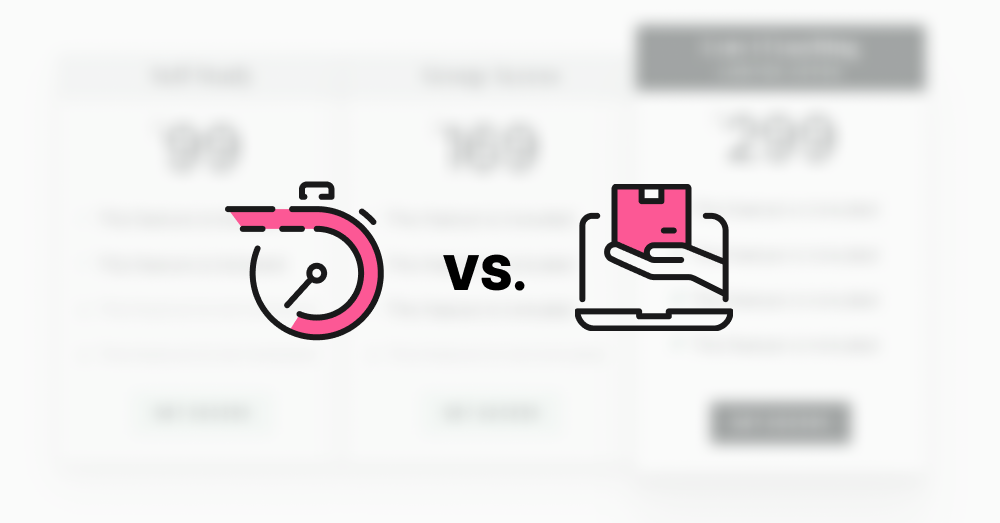
Hourly vs. fixed packages: which pricing model is better?
Neither is better for every project: hourly pricing protects you on open-ended work with an unclear scope, while fixed-price packages win on well-defined projects where the client wants a clear price. Here are the pros and cons of each, so you can decide what fits the way you work.
The great pricing debate: hourly vs. fixed
Before we dive in, take a moment to consider: How do you feel when you hire someone with an open-ended hourly rate versus a clear package price? Your clients are thinking about this too!
Hourly pricing: pros and cons
- ✅ Transparency and fair compensation: You get paid for every hour worked, so you're compensated for revisions and unexpected scope changes.
- ✅ Flexibility: Works well for open-ended projects where the scope isn't clearly defined.
- ✅ Easy to scale: As your skills improve, you can increase your hourly rate and earn more without taking on extra work.
- ❌ Unpredictable costs for clients: Clients may hesitate to commit if they don't have a clear idea of the final cost.
- ❌ Efficiency isn't always rewarded: If you work faster thanks to experience, you might end up making less money compared to a fixed-price model.
- ❌ Tracking time is a hassle: It requires diligent time tracking and reporting, which adds extra admin work.
Fixed-price packages: pros and cons
- ✅ Clear expectations: Clients know exactly what they'll pay, which helps build trust and speeds up the sales process.
- ✅ Higher profit margins: If you estimate your time well and work efficiently, you can increase profitability.
- ✅ Less admin work: No need for time tracking, which makes projects easier to manage.
- ❌ Scope creep is a risk: Clients may request extra revisions or additional features without extra payment.
- ❌ Challenging to price correctly: If you underestimate the time needed, you might end up making less than your hourly rate.
- ❌ Not ideal for open-ended projects: Works best for well-defined projects with clear deliverables.
Reflective question: Which model aligns better with how you prefer to work? Do you enjoy the certainty of fixed prices or the flexibility of hourly billing?
The hybrid approach: best of both worlds
You don't have to choose one model: a hybrid approach uses fixed packages for standard websites, hourly rates for anything outside the package, and a monthly retainer for ongoing support.
Here's a little secret from my 15+ years of running a web design business: many successful designers (myself included) work this way:
- ✅ Fixed pricing for standard services (e.g., "Basic 5-Page Website Package: $2,500")
- ✅ Hourly rates for custom features, additional revisions beyond the package limit, or ongoing maintenance
- ✅ Retainer pricing for clients who need regular updates or support (e.g., "10 hours per month at a discounted rate of $100/hour")
This approach gives clients the predictability they crave while protecting you from scope creep monsters and never-ending revision cycles.
Should you display pricing on your website?
It depends on your clients: full prices suit designers who serve small businesses with straightforward needs, "starting at" prices suit semi-custom packages, and "contact for a quote" suits complex, high-end custom projects.
This is a hot debate in the web design world. Here are the three approaches:
- 1️⃣ Full transparency: Display complete pricing information for all packages and services.
Works well for: Designers targeting small businesses with straightforward needs and modest budgets. - 2️⃣ "Starting at" pricing: Show base prices but make it clear that final quotes depend on specific requirements.
Works well for: Mid-range designers with semi-customizable packages. - 3️⃣ Contact for a quote: No specific pricing information, just a call to action to request a custom quote.
Works well for: High-end designers working on complex, custom projects.
Reflective question: What would your ideal client prefer to see in terms of pricing transparency?
Whatever you choose, gather the project requirements before you quote. My guide to efficient requirements gathering shows how.
Final thoughts: find what works for YOU
There's no "correct" pricing model for web design services: the best approach is the one that matches your work style and attracts your ideal clients. Whether you charge hourly, offer fixed-price packages, or mix it up, the key is clarity and confidence in your pricing.
Remember: You're not just selling hours of work, you're selling years of experience, problem-solving skills, and the ability to turn a client's vision into digital reality.
And while we're on the topic of pricing… I've found that offering hourly-based support is one of the most helpful things I can do for fellow Divi web designers. Sure, tutorials are great (and I love creating them!) but nothing compares to solving a specific problem together, one-on-one. That's why I offer personalized support sessions where we can tackle your trickiest issues, implement custom designs, or troubleshoot, all tailored to your project.
👉 Learn more about my 1-on-1 Divi support services
Now I'd love to hear from you! Do you display pricing on your website? What pricing model works best for your business? Share your experiences in my Divi Lovers Facebook group! 💬